Questions to Ask a Wedding DJ Before Booking
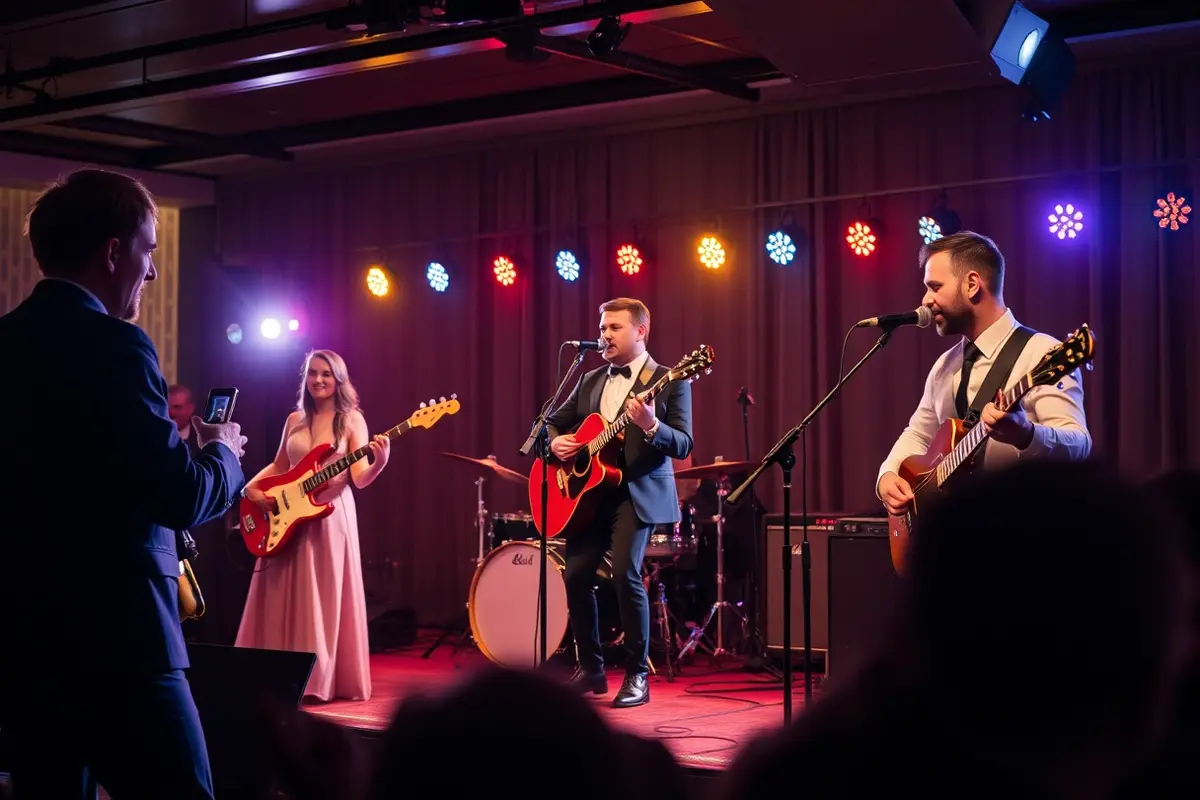
Ask a wedding DJ five things before you sign anything: what backup equipment they bring, who actually shows up on the day, how they run the mic, how they handle your do-not-play list, and what overtime costs in writing. A professional full-service wedding DJ runs $1,500–$3,000 in most US markets in 2026, and the gap between a great one and a disaster is almost never music taste - it's logistics, and the right questions expose it in a 30-minute call.
Every DJ's website shows a packed dance floor, and every consultation includes the phrase "we read the room." You can't evaluate mixing skill from a sales call - but you can evaluate professionalism: a plan for a dead laptop, a written overtime rate, an honest answer about who's behind the booth on your date. This guide covers the questions that separate the pros, what good and bad answers sound like, and the 2026 costs to sanity-check every quote against.
Who will actually DJ my wedding?
This is the single most important question, and couples skip it constantly. Many wedding DJ companies are multi-op businesses: you meet a polished owner or salesperson, sign with the brand, and get assigned a performer later - sometimes just a few weeks before the date. That's not automatically bad, but you should learn it before you sign, not at the final planning call.
Ask, in this order:
- "Will you personally be the DJ at my wedding?" If yes, get their name written into the contract. If no, ask to video-call the actual performer before signing - a company that won't arrange that is telling you something.
- "How many weddings does your company run per weekend?" One or two means the person you met is behind the booth. Ten means you're booking a roster.
- "What happens if my DJ is sick or has an emergency?" The professional answer names a specific plan: trained backup DJs, a shared planning file, and your timeline and playlists documented well before the day.
- "How long has my specific DJ been doing weddings?" Weddings are a different job from clubs and corporate parties - the DJ is also the MC, the timeline enforcer, and the person who absorbs a 20-minute dinner delay in real time. Two-plus years of weddings specifically, not "events," is the floor you want.
If you're comparing solo operators against multi-ops while browsing wedding DJs, neither model wins by default. Solo pros give you certainty about who shows up; established multi-ops give you built-in backup coverage. What you're screening for is transparency.
What backup equipment do you bring?
Gear fails. Laptops crash, mixers die, microphones cut out mid-toast. The difference between a professional and a hobbyist is not whether failure happens - it's whether anyone notices. A pro's answer to this question is specific and boring; a hobbyist's answer is "I've never had a problem."
The redundancy checklist a professional carries on site:
- A second music source - backup laptop, tablet, or media player, loaded and connected, not in the car.
- Music stored offline on two drives. Streaming over venue WiFi as the primary plan is an automatic no - ask directly whether the library is local.
- A backup mixer or controller, plus spare cables for every connection type in the rig.
- At least two wireless microphones. Toasts die on single-mic setups every weekend.
- A powered spare speaker, or the ability to run the room on one side while swapping.
- Surge protection and a real answer on power. A typical DJ rig pulls 10–15 amps; ask what circuits they need from the venue. If your reception is in a field, tent, or raw space, fold their load sheet into your generator math - the power planning in our outdoor wedding planning guide applies to sound rigs too.
Also ask about backup people, not just backup gear: does the company keep a DJ on call on Saturdays? A solo operator should have a reciprocal arrangement with another local pro - a real one, with a name they'll tell you.
How would you describe your MC style?
MC work is half the job and the half couples forget to screen. The grand entrance, toast handoffs, dance announcements, and last-call energy all run through your DJ's mouth, and MC styles range from full hype-man to nearly invisible. Neither end is wrong - a mismatch is.
Questions that reveal MC style
- "Can I see unedited footage of you on the mic at a real wedding?" A highlight reel proves editing skill. Three continuous minutes of a grand entrance proves the actual product. Pros have this on their phone.
- "How much talking do you do between songs?" Some DJs run commentary all night; others speak only for scheduled announcements. Decide which wedding you want before the call.
- "How do you handle name pronunciations?" The right answer involves a phonetic sheet for the whole wedding party, confirmed out loud at the final meeting. A botched name in the grand entrance is the mistake couples remember years later.
- "Do you take guest requests on or off the mic?" On-mic request culture changes the room's energy - fine if you want it, jarring if you don't.
- "Who else will be making announcements?" If your planner or venue captain also announces, someone needs to own the mic - decide who now.
If you're still weighing formats, MC skill is a genuine advantage DJs hold in the DJ vs. live band decision: a bandleader fronts the band, but a good DJ manages the entire room.
How do you handle the do-not-play list?
This question sounds trivial and is actually a professionalism X-ray. You're listening for two things: whether the list is absolute, and what happens when a guest requests a banned song at 10 p.m.
The professional answer: the do-not-play list is a hard no, including for guest requests, including for your parents, and the DJ deflects politely without naming you as the reason. The amateur answer is some version of "I use my judgment" or "if the dance floor wants it, I'll play it" - which means your list is a suggestion.
Related questions worth two minutes each:
- "Explicit lyrics - radio edits by default, or do I choose?" Pros default to clean versions and confirm your preference in writing.
- "How big should my must-play list be?" Good answer: 15–30 songs plus a genre conversation, leaving the DJ room to read the floor. A DJ who asks you to build the whole night's playlist isn't really DJing - ask how they balance your list against the room.
- "How do you handle dinner music?" Specific genre and volume answers signal experience - dinner music that's too loud to talk over is a perennial guest complaint.
- "When do we finalize the music?" The standard is a planning meeting 2–4 weeks out, which should slot into your broader wedding music timeline covering ceremony, cocktail hour, and reception picks.
What's included in your price - and what does overtime cost?
Get every number in writing before you compare quotes. In 2026, a professional wedding DJ typically runs $1,500–$3,000 in most US markets and $2,000–$4,500 in major metros for a package built around 5–6 reception hours. Against a mid-market $30,000–$35,000 wedding, that's roughly 5–8% of budget - pressure-test your own allocation with the budget calculator. Quotes under about $1,000 are where the horror stories cluster: that price usually means no backup rig, no insurance, and a weekend side hustle.
What packages include vs. what costs extra
| Line item | Typically included | Typical 2026 add-on cost |
|---|---|---|
| Reception coverage (5–6 hours) | Yes | - |
| Wireless mics for toasts | Yes | - |
| Basic dance floor lighting | Usually | $100–$300 if not |
| Ceremony audio (second system + lapel mic) | Sometimes | $200–$450 |
| Cocktail hour audio (separate zone) | Sometimes | $150–$350 |
| Uplighting (8–12 fixtures) | No | $200–$500 |
| Photo booth | No | $400–$900 |
| Overtime, per hour | No | $150–$300 |
| Travel beyond 30–50 miles | No | Flat fee or per-mile |
Overtime deserves three questions of its own, because the decision happens at the worst possible moment - 9:45 p.m., dance floor full, everyone shouting:
- "What's the overtime rate, and is it in the contract?" Verbal rates have a way of evolving at 10 p.m.
- "When do I have to decide, and who can authorize it?" Pros ask for a decision by a set time and accept it from one named person - otherwise a tipsy groomsman authorizes $300 on your behalf.
- "Does my venue actually allow it?" Many venues enforce hard music cutoffs and charge their own overtime fees that dwarf the DJ's. Check both before assuming the option exists.
On payment structure: a 25–50% retainer with the balance due one to two weeks before the wedding is standard. Full payment demanded a year out, or cash-only anything, is a flag.
Logistics questions that separate pros from hobbyists
None of these are glamorous. All of them predict how your reception actually runs.
- "Do you carry liability insurance?" The standard is a $1,000,000 policy, and many venues won't let an uninsured vendor load in. A pro emails the certificate the same day you ask.
- "Have you worked at my venue?" Not required - but if they haven't, ask whether they'll do a site visit or call the venue about load-in, power, and sound restrictions. The DJ who asks you for the floor plan is the DJ you want.
- "How early do you arrive?" A full rig takes 60–90 minutes to set up, and pros build in buffer so soundcheck ends before guests walk in. "I'll get there around start time" ends receptions before they begin.
- "What do you need from me and the venue?" A real answer lists specifics: a six-foot table, two dedicated 20-amp circuits near the dance floor, a vendor meal, and load-in access details.
- "Will you build the reception timeline with me?" The DJ executes the timeline minute by minute - entrance, toasts, cake, parent dances, send-off - so they should either build it with you or stress-test yours against our wedding day timeline template, then coordinate with your photographer so nobody announces the first dance while the photo team is outside shooting sunset portraits.
- "What will you wear, and do you drink at events?" Awkward to ask, quick to answer. You want "formal unless you tell me otherwise" and "never."
Quick reference: strong answers vs. red flags
| Question | Strong answer | Red flag |
|---|---|---|
| Who's my DJ? | Named in the contract, met before signing | "We assign your DJ closer to the date" |
| Backup gear? | Redundant rig itemized without hesitation | "Never had a problem in ten years" |
| Do-not-play list? | "Hard no, even for guest requests" | "I use my judgment on the night" |
| MC style? | Unedited footage offered on the spot | Highlight reel only, changes subject |
| Overtime? | Written rate, decision deadline, named authorizer | "We'll figure it out that night" |
| Insurance? | Certificate emailed on request | "Venues never ask for that" |
| Timeline? | Builds or reviews it with you at a final meeting | "Just send me your playlist" |
One soft answer is a follow-up conversation. Two or more is a different DJ.
When should you book, and how do you compare candidates?
Book 9–12 months out for peak-season Saturdays - good DJs take one wedding per day, and the best calendars fill about a year ahead. The efficient process:
- Shortlist three DJs whose unedited footage you've actually watched.
- Run the questions above in a 30-minute call with each - on video, so you see how they present.
- Compare quotes only after normalizing them: same hours, same ceremony and cocktail coverage, overtime rates included.
- Read the contract for the named performer, the backup clause, refund terms, and the overtime rate before paying the retainer.
- Calendar the final planning meeting and music deadline immediately so the 2–4-week-out details don't get lost in the crunch.
Frequently asked questions
How much does a wedding DJ cost in 2026?
Expect $1,500–$3,000 in most US markets and $2,000–$4,500 in major metros for 5–6 reception hours, with ceremony audio, uplighting, and extended coverage as the common add-ons. Quotes under $1,000 typically signal missing backup gear or insurance - ask exactly what's excluded.
Is a DJ worth 5–8% of my budget?
The DJ controls the room's energy for four to five hours and MCs every pivotal moment, which is strong cost-per-impact compared to line items guests never notice. See where the rest of a mid-market budget typically goes in our wedding budget breakdown before deciding where to cut.
Should I tip my wedding DJ?
Tipping is customary but not mandatory: $150–$300, or roughly 10% of the fee, for excellent work, handed over at the end of the night. Company owners are traditionally exempt while employees and subcontracted performers aren't - the full etiquette is in our vendor tipping guide.
Do I need the DJ for my ceremony too?
If the ceremony is at the same site, the $200–$450 ceremony audio add-on is usually worth it: a lapel mic on the officiant, a handheld for readers, and professionally cued processional music. Unamplified vows are inaudible past the fourth row outdoors, and asking a cousin to hit play on a portable speaker fails more often than it works.
Ready to find your music & djs?
Browse verified music & djs on Weddli, with real reviews and transparent profiles.
Browse Music & DJs