The Bridal Makeup Trial: How to Prepare and What to Ask
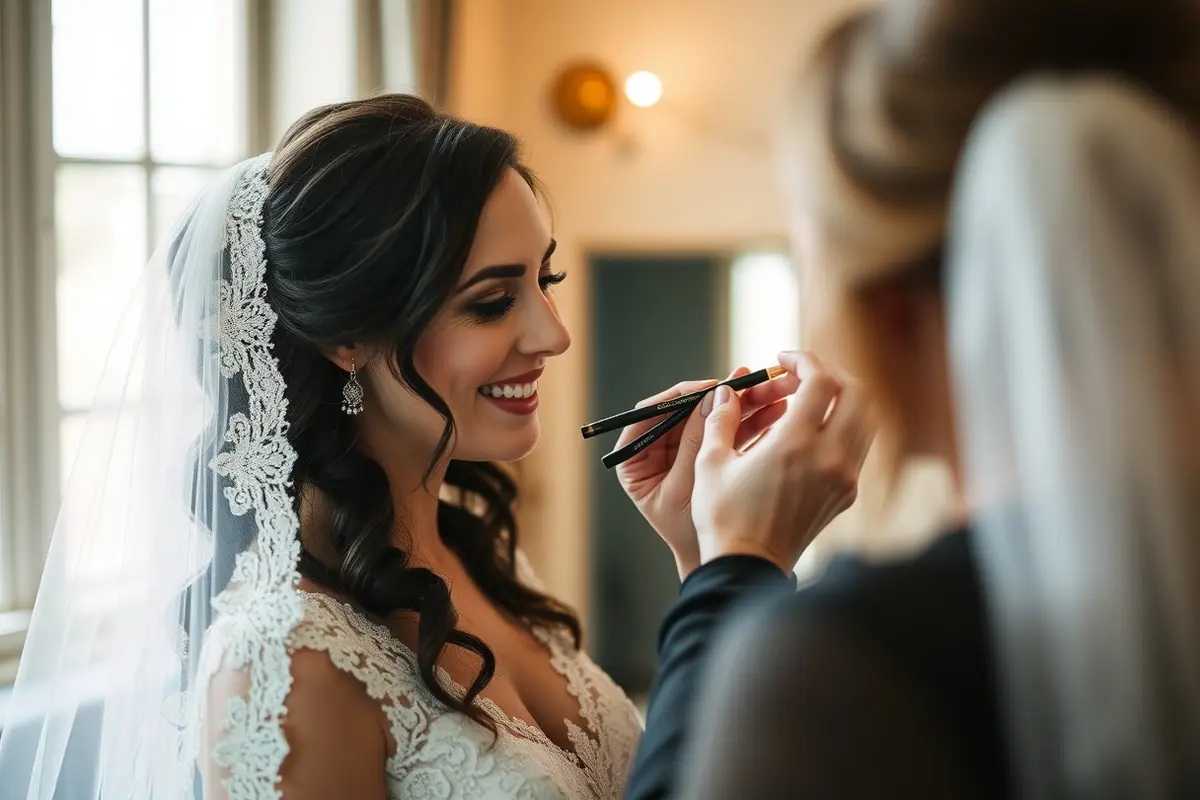
Book your bridal makeup trial 2–3 months before the wedding and expect to pay $75–$150 for it in 2026 - roughly half to three-quarters of the $150–$300 day-of rate, with some artists crediting the trial fee toward your final booking. A trial is not a preview appointment; it's a working session where you test the look in daylight, in flash photos, and across a full 8–12 hour wear, then leave with a written face chart and a locked morning timeline.
The couples who get burned treat the trial as a fun afternoon instead of a stress test. This guide covers when to schedule it, what to bring into the chair, how to test longevity the same day, the red flags that predict a bad wedding morning, and what it should cost against the day-of rate.
When should you book a bridal makeup trial?
Book the artist 6–9 months before the wedding, and schedule the trial itself 2–3 months out. In-demand artists fill peak-season Saturdays close to a year ahead, so the booking and the trial are two separate decisions on your planning timeline - secure the date first, test the look later.
Why 2–3 months is the sweet spot:
- Earlier than 4 months and your skin lies to you. Skin tone shifts with the seasons - a January trial for a July wedding tests foundation on a face two shades lighter than the one walking down the aisle.
- Later than 6 weeks and you have no exit. If the trial goes badly, you need time to book a second trial or a different artist entirely. At three weeks out, every decent artist in your market is committed.
- Weekdays are your friend. Saturdays are wedding days; most artists only offer trials Tuesday–Thursday, so plan a half-day off.
- Stack it with an event. A trial the morning of your bridal shower, engagement photos, or final fitting gets you a real-world wear test for free.
- Pair it with the hair trial if the same vendor does both. A combined session runs 2.5–3.5 hours but shows you the finished head, not half of it - coordinating the two services is covered in our bridal hair and makeup guide.
If you're still comparing artists, do that before paying for trials. Browse hair and makeup artists for recent wedding galleries on brides with your skin tone and eye shape - portfolios filter faster than trials do - and shortlist two before you spend a dollar.
How much does a makeup trial cost in 2026?
A standalone bridal makeup trial typically runs $75–$150 in most US markets and $125–$250 with senior artists in major metros. Day-of bridal makeup runs $150–$300, climbing to $250–$450 in the biggest cities and destination markets. The trial prices at 50–75% of the day-of rate because it takes just as long but involves no travel or 5 a.m. start.
Trial vs. wedding day: the full price sheet
| Service | Typical 2026 range | Notes |
|---|---|---|
| Bridal makeup trial | $75–$150 | $125–$250 with senior/lead artists in metros |
| Bridal makeup, day-of | $150–$300 | $250–$450 in major markets |
| Second trial | $50–$150 | Often discounted from the first |
| Bridal party makeup, per person | $75–$150 | Many artists set a 4–6 person minimum for on-location |
| Airbrush upgrade | $25–$75 | Per face; sometimes bundled for the bride |
| False lashes | $10–$25 | Frequently included for the bride, add-on for the party |
| Touch-up services, hourly | $75–$150 | Artist stays through photos or ceremony |
| Travel fee | $50–$150 flat or per-mile | Kicks in beyond 20–30 miles, typically |
| Early-start fee | $25–$100 | For arrival before 6–7 a.m. |
Pricing patterns worth knowing before you compare quotes:
- "Free trial" is usually a volume business - a high-turnover studio where the person doing your trial may not be the person at your wedding. Confirm the same artist for both, in writing.
- Trial-fee credits are common. Many artists apply the fee to your balance if you book within a week or two. Ask before the trial, not after.
- Minimums change the math. If an artist requires six services for on-location work and you have two bridesmaids getting makeup, you're paying for empty chairs. Slot the real total into your budget breakdown, not the per-face rate.
- Deposits run 25–50%, and trial fees are almost always non-refundable. Normal, as long as it's in a contract.
What should you bring to a makeup trial?
Bring reference photos, the veil, a top in your dress color, and your phone charged for photos - everything you capture at the trial becomes the spec sheet for the wedding morning.
The full list:
- 3–5 inspiration photos of makeup, not faces. Choose images on people with your skin tone, eye shape, and coloring - a smoky eye that reads soft on deep-set eyes reads heavy on prominent ones.
- 2–3 photos of yourself where you love how you look. More useful than any inspiration image; they show the artist what "still looks like me" means.
- The veil, plus any hair accessories. Blush placement that works bare-headed can disappear behind tulle. If the veil hasn't arrived, bring a photo.
- A white or ivory top. Foundation that photographs neutral against a navy sweater can pull orange against white.
- Your phone, charged, with the flash on. You'll shoot in three lights before you leave: window daylight, indoor ambient, and direct flash. If your photographer shoots heavy flash at receptions, the flash test matters more than the mirror.
- Anything your skin already fights with - allergy list, your own mascara if you're contact-lens sensitive, the lip balm that doesn't break you out.
- Hair roughly in the day-of shape. Up vs. down changes how much cheek and jaw the makeup has to carry; a rough ponytail approximating an updo is enough.
- One opinion, maximum. Five opinions in the room produces makeup designed by committee, and it looks like it.
Arrive with a clean, moisturized, makeup-free face - and skip new skincare, facials, or aggressive exfoliation in the 72 hours before. The trial should test makeup on your normal skin, because that's what shows up on the wedding day.
How do you test whether the makeup actually lasts?
Wear the trial makeup for 8–12 hours before washing it off, and schedule the appointment in the morning so a full wear-day is possible. Wedding makeup goes on at 8 or 9 a.m. and has to survive photos at 5 p.m., dinner at 7, and a dance floor at 10 - twenty minutes in the artist's ring light tells you nothing about hour nine.
Run these tests the same day:
- The three-light photo check, immediately. Window daylight, indoor ambient, direct flash. High-SPF foundation can bounce flash and cast the face ghost-white - "flashback" - and you want to find that at the trial, not in your reception gallery.
- The jawline check in daylight. Step outside and photograph your jaw and neck. A visible line means the shade match failed, whatever it looked like inside.
- Checkpoints at hour 4 and hour 8. Photograph T-zone, under-eyes, and lips each time. You're looking for oil breakthrough, foundation settling into fine lines, and how the lip color dies - fading evenly is fine, fading into a ring is not.
- The tear test. Dab a wet tissue at your inner corner and lower lash line. If it streaks now, it streaks during the vows. The trial is where you verify the waterproof formulas actually got used.
- The hug and transfer test. Press a white cloth against your cheek. Some transfer is normal with traditional foundation; a full face-print means the setting approach won't survive a 200-guest receiving line.
- Wear it through a real afternoon. Run errands, sit in a car with the AC on, eat lunch. Static wear on a couch is not the test; a wedding day is movement, temperature swings, and food.
Text the artist your hour-8 photos with specific notes - "oil breakthrough by hour 5, lip gone by hour 6" - and a good artist responds with concrete fixes: different primer, powder-setting the T-zone, a liner base under the lip color. That exchange is the entire point of paying for a trial.
Red flags at a bridal makeup trial
Some trial problems are fixable with feedback. These aren't - they predict the wedding morning, and each is your cue to book a second trial elsewhere while there's time:
- Sanitation shortcuts. Brushes not cleaned between clients, mascara wands double-dipped, lip color applied straight from the bullet. If you can see it at a trial, imagine the sixth face of a wedding morning.
- "Trust me" instead of adjustment. You ask for less coverage or a softer eye and the artist defends the original instead of changing it. The day-of version is you crying in the chair at 9 a.m. with no time to fix anything.
- No contract, or a vague one. Arrival time, number of faces, per-face timing, travel fee, and a backup artist should all exist in writing. An artist who shrugs at "what if you're sick on the day" has no answer - and that is the answer.
- Can't state faces-per-hour. Experienced wedding artists know their pace - typically 45–60 minutes for the bride, 30–45 per bridesmaid - and will build a morning schedule on the spot. Someone who can't estimate this will blow up your wedding-day timeline, and late makeup cascades into photos, ceremony, everything.
- The mirror-only reveal. Discouraging photos, or only showing the look under flattering studio lighting, hides how it reads in real light.
- Kit problems. Visibly expired products, or a shade range that can't match deeper or very fair skin without ash or orange. The kit is the toolset; a limited one caps the result.
- Hard-sell pressure. Pushing airbrush, lashes, or skincare add-ons before asking what you actually want. Upsells exist everywhere; leading with them is the tell.
What should you ask before you leave the trial?
Leave with answers to these, ideally on the face chart or in a follow-up email:
- What exact products did you use? A written face chart - product, shade, placement - means any competent artist could rebuild the look if disaster strikes, and it tells you which lip color to buy for touch-ups.
- Do you provide a touch-up kit? Many artists leave the bride lip color and blot papers; others sell the lipstick at cost. Either way, someone in your party carries lips and powder on the day.
- What time do you arrive, and when is the bride in the chair? Standard practice puts the bride second-to-last or last so her makeup is freshest for photos. The artist should work backward from your ceremony time, not the other way around.
- Are you working alone or with an assistant? Six faces solo is 3.5–4.5 hours; an assistant halves it. This decides whether your morning starts at 6 a.m. or 8:30.
- Will you stay for touch-ups, and at what rate? Typically $75–$150/hour - worth it for humid outdoor summer weddings, skippable for a winter ballroom.
- What's your backup plan if you're sick? The professional answer names a specific colleague and confirms your face chart transfers.
- Is the trial fee credited if I book? Ask even if you think you know.
Handle the money questions now, too - trial payment is due at the appointment, and tipping 15–20% at the trial is customary just as on the wedding day; our vendor tipping guide covers how the day-of gratuity usually gets handled.
Airbrush vs. traditional: decide it at the trial
The trial is the only sensible place to settle this, because the right answer depends on your skin, not the marketing. Expect a $25–$75 upcharge for airbrush, and ask the artist to do one cheek in each if you're genuinely torn.
| Airbrush | Traditional | |
|---|---|---|
| Feel | Lightweight, thin layers | Fuller, buildable |
| Longevity | Transfer-resistant, strong in humidity | Very good when set well |
| Touch-ups | Harder - can't blend over easily | Easy with powder or sponge |
| Dry or mature skin | Can read dry, settles in texture | Usually the safer choice |
| Oily skin, summer, tears | Often the winner | Needs deliberate setting |
Neither is "more professional." A skilled artist with traditional products beats a mediocre one with an airbrush gun every time - which is one more reason the trial exists.
Frequently asked questions
Is a bridal makeup trial worth the cost?
Almost always. For $75–$150 you're buying a rehearsal of the most photographed face of your life, a longevity test, and a working relationship with the artist before the high-stakes morning. The exceptions are genuinely minimal-makeup brides on tight budgets - and even then, a trial catches shade mismatches that no mirror conversation will.
When is it too late to book a trial?
Under about four weeks out, a bad trial leaves no realistic path to a replacement artist. Inside that window, book the trial immediately, bring ruthless clarity about what you want, and know your fallback is a second trial with the same artist rather than a new search.
Should I get a second trial?
Get one if the first ended with "I'd change three things" rather than "I'd change one." Second trials run $50–$150 and are cheap insurance against a look you were talked into. If the second trial still misses, that's your answer - switch, and treat the sunk fees as exactly that.
Do I wash the trial makeup off before an event that evening?
No - wearing it out is the test. Book the trial the morning of a shower, date night, or engagement shoot and let the evening double as hour-10 data. Photograph your face before removal and send the artist the honest results - those adjustments make the wedding-day version bulletproof.
Ready to find your hair & makeup?
Browse verified hair & makeup on Weddli, with real reviews and transparent profiles.
Browse Hair & Makeup